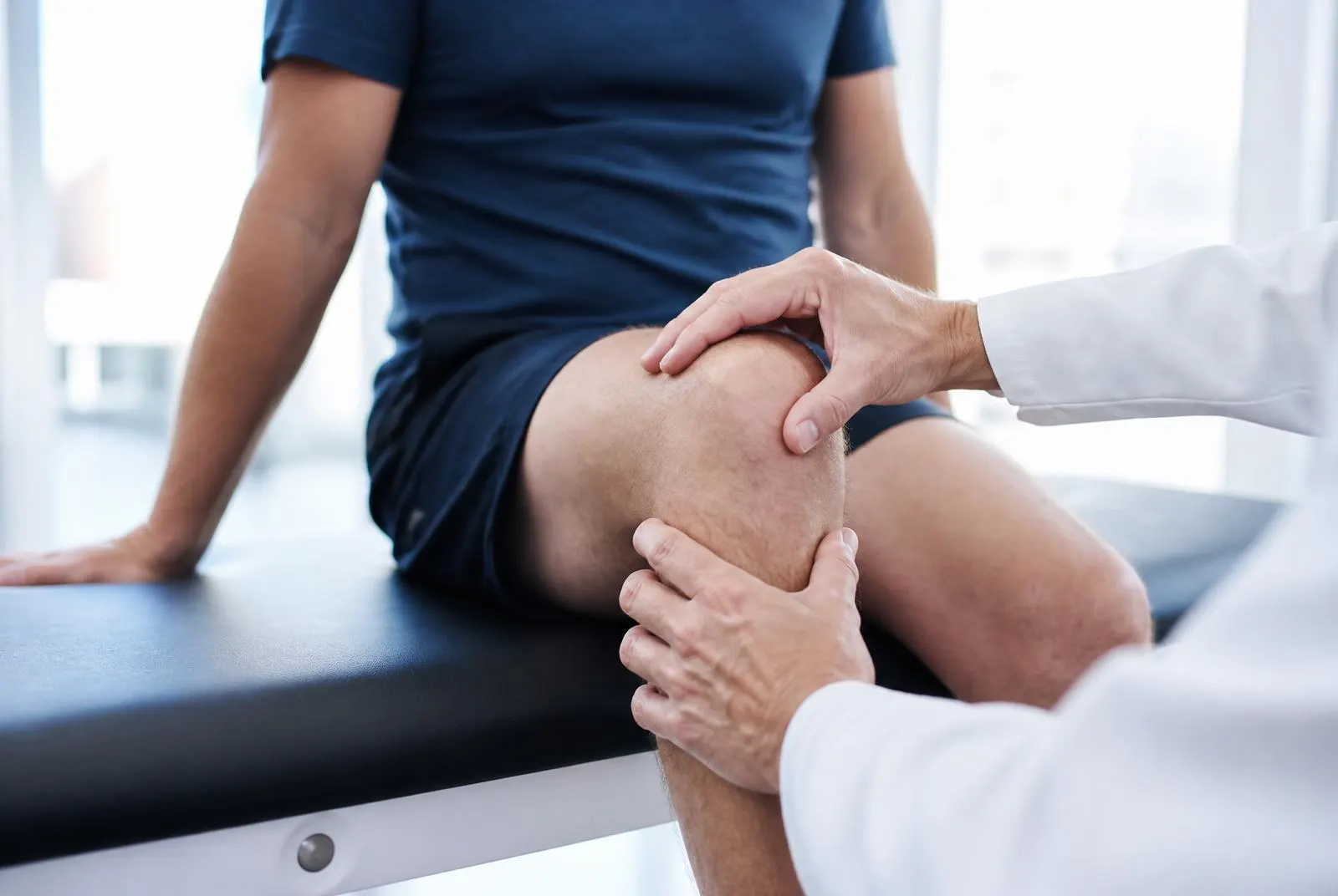
What to Expect, Week by Week
Knee Replacement Recovery
Most people recover well from a knee replacement, but it helps to know what the months ahead really look like. Here is an honest, week-by-week guide from Mr Paddy Subramanian.
A knee replacement is a bigger recovery than a hip replacement. The pain is more significant and the timeline is longer, and it helps to know that honestly from the start. This guide sets out what usually happens, from the first day after surgery through to a full recovery, drawing on Mr Subramanian's enhanced-recovery, minimally invasive practice. It is general information, not a substitute for the advice he gives you about your own knee.
How long does it take to recover from a knee replacement?
Most people are walking on the day of surgery and go home the same day or the following day, using Mr Subramanian's enhanced-recovery pathway. You are back to light everyday activities by around six weeks, although a full recovery takes 12 to 18 months, noticeably longer than a hip replacement. A partial knee replacement generally recovers more quickly, though it is not suitable for everyone. These timings are broadly in line with NHS recovery guidance. Recovery is not a straight line, and good days and stiffer days in the early weeks are normal.
Managing the pain
We will be honest with you: there is significant pain after a knee replacement, more than after a hip, and knowing that in advance is part of being prepared for it. What matters is that it is well managed, and Mr Subramanian's practice is built around that. We optimise your pain relief with multimodal analgesia, combining several types of painkiller so each can be used at a lower dose. Mr Subramanian's consultant anaesthetist, Dr Sagar Tiwatane, plans your anaesthetic and pain relief with you on the day of surgery.
What happens week by week?
| When | What usually happens |
|---|---|
| Day 0 to 1 | You walk with the physiotherapist and nursing staff, and most patients go home the same day or after an overnight stay, on Mr Subramanian's enhanced-recovery pathway. |
| Week 1 to 2 | You walk with crutches and do your exercises every day. Mr Subramanian closes the wound with a hand-stitched dissolvable suture, so nothing needs removing, and your wound is reviewed in hospital at about two weeks. |
| Weeks 2 to 6 | A gradual recovery. Most people still need a walking aid through to about six weeks rather than walking unaided sooner. Pain and swelling can be significant at this stage. |
| Weeks 6 to 12 | You see Mr Subramanian in clinic between six and twelve weeks to discuss your progress, aiming for a bend of at least 90 degrees. Physiotherapy stays important, and most people are back to driving and work from around six weeks. |
| 3 to 18 months | Strength, movement and stamina keep building. A full knee replacement recovery commonly takes 12 to 18 months, noticeably longer than a hip. |
Your own plan may move faster or slower, and we will tailor it to you.
Your wound, stockings and blood thinners
Mr Subramanian closes the wound with a hand-stitched, dissolvable suture, individualised to you, rather than the clips many surgeons use, which tends to leave a neater scar. Nothing needs to be removed, and your wound is reviewed in hospital about two weeks after surgery. You may be given a compression stocking in hospital, but this is generally discarded once you leave, so you do not need to wear compression stockings at home. To reduce the risk of blood clots you take a blood thinner for about two weeks after a knee replacement, or about 35 days after a hip replacement; this can add to the swelling in the leg, which settles as the course finishes.
What exercises help knee replacement recovery?
The single most important thing you can do is follow the structured physiotherapy programme you are given, started early and done every day. The exercises rebuild the muscles around the knee and restore its movement, and they are the main engine of your recovery rather than an optional extra. Early on this means gentle bending and straightening, tightening the thigh muscle, and short, frequent walks rather than long ones, progressing as your physiotherapist guides you.
When can I drive, work and get back to normal?
You can usually drive again from about six weeks, once you can safely control the car and perform an emergency stop, applying the brake sharply, and once Mr Subramanian agrees. Most people return to work around the same point depending on how physical the job is, in line with national guidance, and a partial knee replacement may allow an earlier return. You are also usually able to fly from about six weeks, once the risk of blood clots has reduced. Please check with us before you start driving again.
How long does a knee replacement last?
Modern knee replacements are highly durable. Mr Subramanian uses ODEP-rated implants, rated by the Orthopaedic Data Evaluation Panel for their proven, long-term track record, and materials chosen to last as long as possible, within a standardised, high-volume practice with more than 500 hip and knee replacements a year recorded on the National Joint Registry. A large study of registry data found that 82.3% of total knee replacements were still in place at 25 years, with partial replacements at 69.8%, and many last well over 20 to 25 years. These figures describe large groups of patients rather than a promise for any one person.
What can slow recovery down?
Recovery can take longer if pain is not well controlled, which is why we work hard to stay ahead of it. Some effects of the stronger painkillers are worth knowing about: constipation is common on opioid medication, so we give laxatives and anti-sickness medication to manage it, and a reduced appetite is also common in the early weeks. Please contact Mr Subramanian's team promptly if you have increasing pain, redness or heat around the knee, or any problem with the wound. New calf pain or swelling, or a fever, should also be reported, as these can need urgent review.
Frequently asked questions
Is knee replacement recovery painful?
Yes. There is significant pain after a knee replacement, more than after a hip, and it is important you know that honestly. We optimise your pain relief with painkillers and multimodal analgesia, and Mr Subramanian's anaesthetist discusses your pain management with you on the day of surgery.
How soon will I walk after a knee replacement?
You will usually be walking out of hospital on the day of surgery or the day after, with crutches or a frame at first.
Will I be able to kneel on my new knee?
Many people find kneeling uncomfortable because the scar can be sensitive, but there is no medical reason not to kneel. Some patients kneel without difficulty, while for others it remains a problem.
Do I need physiotherapy after a knee replacement?
Yes, and it is crucial. Physiotherapy is an integral part of recovery and a major factor in how well your knee replacement does.

Take the first step today
Living with hip or knee pain does not have to be permanent. Book a consultation and find out exactly what is wrong, what your options are, and what life could look like without the pain.