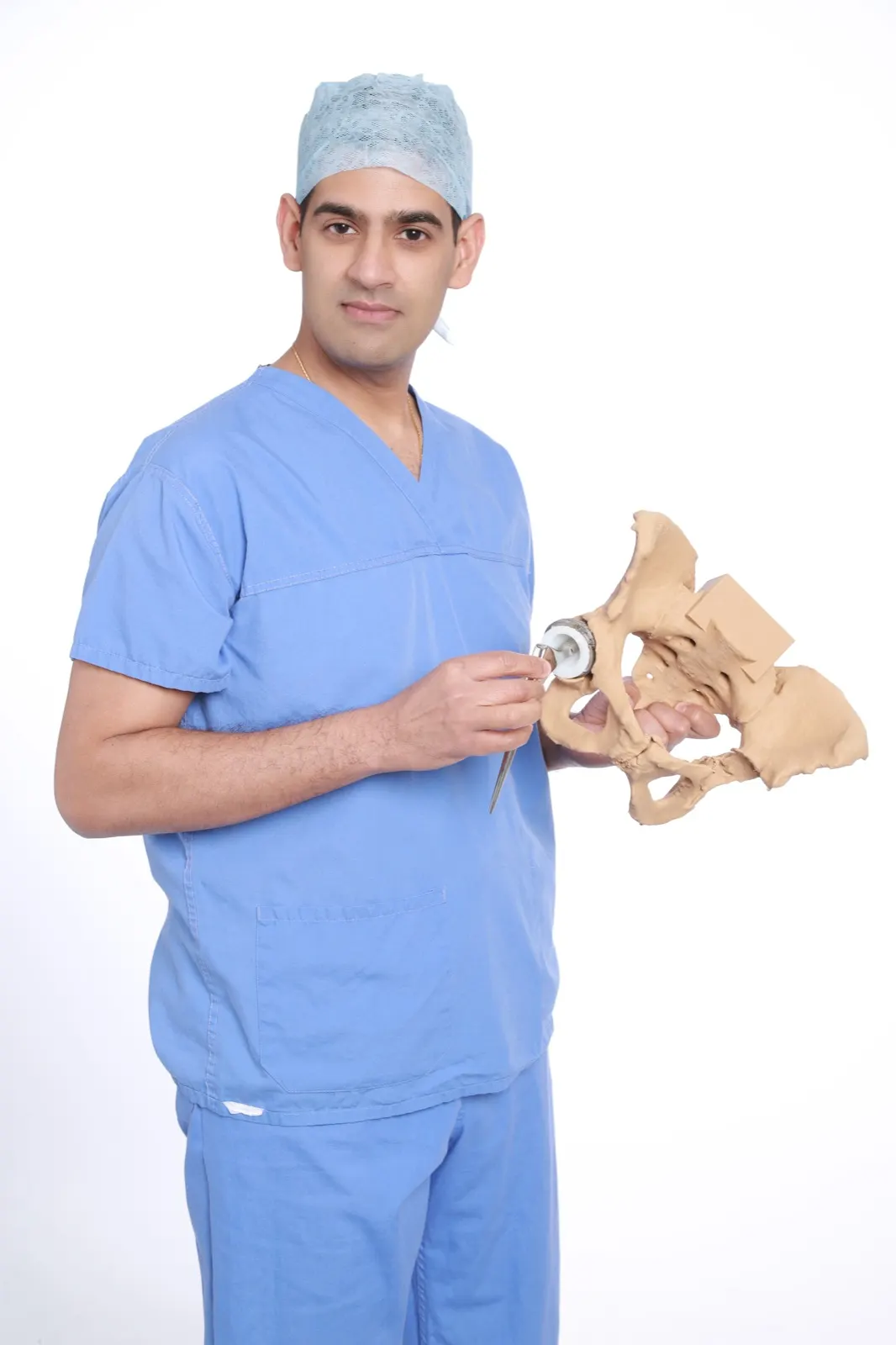
Muscle-Sparing, Minimally Invasive Hip Surgery
Anterior Approach Hip Replacement
A hip replacement performed through the front of the hip, working between the muscles rather than cutting them. Here is what the anterior approach is and why Mr Paddy Subramanian offers it.
The anterior approach is a modern, muscle-sparing way of carrying out a hip replacement. Mr Subramanian reaches the hip from the front of the body, working through the natural gap between the muscles rather than cutting or detaching them. This page explains what the anterior approach is, how it differs from conventional hip surgery, what it can mean for your recovery, and how to arrange a consultation.
What is the anterior approach to hip replacement?
In a hip replacement, the worn joint is replaced with an implant. The anterior approach describes the route the surgeon takes to reach it, from the front of the hip. Mr Subramanian works between the natural planes of the muscles, so the muscles around the hip are moved aside rather than cut. The same high-quality implant is used as in any modern hip replacement; what changes is how the joint is reached.
The muscle-sparing difference
Conventional approaches to the hip often involve cutting or detaching muscle to reach the joint, which then has to heal. The anterior approach instead works through the gap between the muscles, leaving them intact. Keeping the muscles whole is why the technique is described as muscle-sparing, and it is central to how Mr Subramanian approaches hip replacement.
Minimally invasive, with a focus on early recovery
Because the muscles are preserved, the anterior approach is minimally invasive and is often associated with a more comfortable early recovery. Many patients are encouraged to stand and walk the same day. For suitable patients, Mr Subramanian combines the technique with an enhanced-recovery, day-case pathway that can mean going home the same day. Recovery still varies from person to person, and you can read what to expect in the hip replacement recovery guide.
Rapid access to surgery
Waiting in pain is hard. Where it is clinically appropriate, Mr Subramanian has the resources to move quickly, from your consultation to surgery within one to two weeks if that is what you need, rather than the longer waits common even in private care. Your timing is always a clinical decision made with you, and there is no obligation after an enquiry.
Am I suitable for an anterior hip replacement?
The anterior approach suits many people who need a hip replacement, but it is not right for everyone. Your anatomy, your general health and the condition of your hip all play a part. The best way to know is an assessment, where Mr Subramanian examines your hip, reviews your imaging and explains which approach is right for you and why.
Frequently asked questions
What is the anterior approach to hip replacement?
The anterior approach is a way of reaching the hip joint from the front of the body. Mr Subramanian works between the natural planes of the muscles rather than cutting through or detaching them, which is why it is described as muscle-sparing and minimally invasive.
Is an anterior hip replacement better than the posterior approach?
Each approach has its place, and the right one depends on your anatomy and your surgeon's experience. The anterior approach is muscle-sparing and is often associated with a quicker early recovery and a lower risk of dislocation. Mr Subramanian will explain which approach suits you at your consultation.
How long is recovery after an anterior hip replacement?
Recovery varies from person to person. Because the muscles are preserved, many patients are encouraged to stand and walk the same day, and for suitable patients Mr Subramanian offers a day-case pathway. You can read more in the hip replacement recovery guide.
Can I have an anterior hip replacement as a day case?
For suitable patients, yes. A muscle-sparing approach combined with an enhanced-recovery pathway can mean going home the same day. Whether a day case is right for you is a clinical decision made with you at your consultation.
Does Mr Subramanian offer the anterior approach privately in London?
Yes. Mr Subramanian offers anterior approach hip replacement privately across London. Self-pay hip packages start from £15,000 and he is recognised by all major UK insurers.

Take the first step today
Living with hip or knee pain does not have to be permanent. Book a consultation and find out exactly what is wrong, what your options are, and what life could look like without the pain.