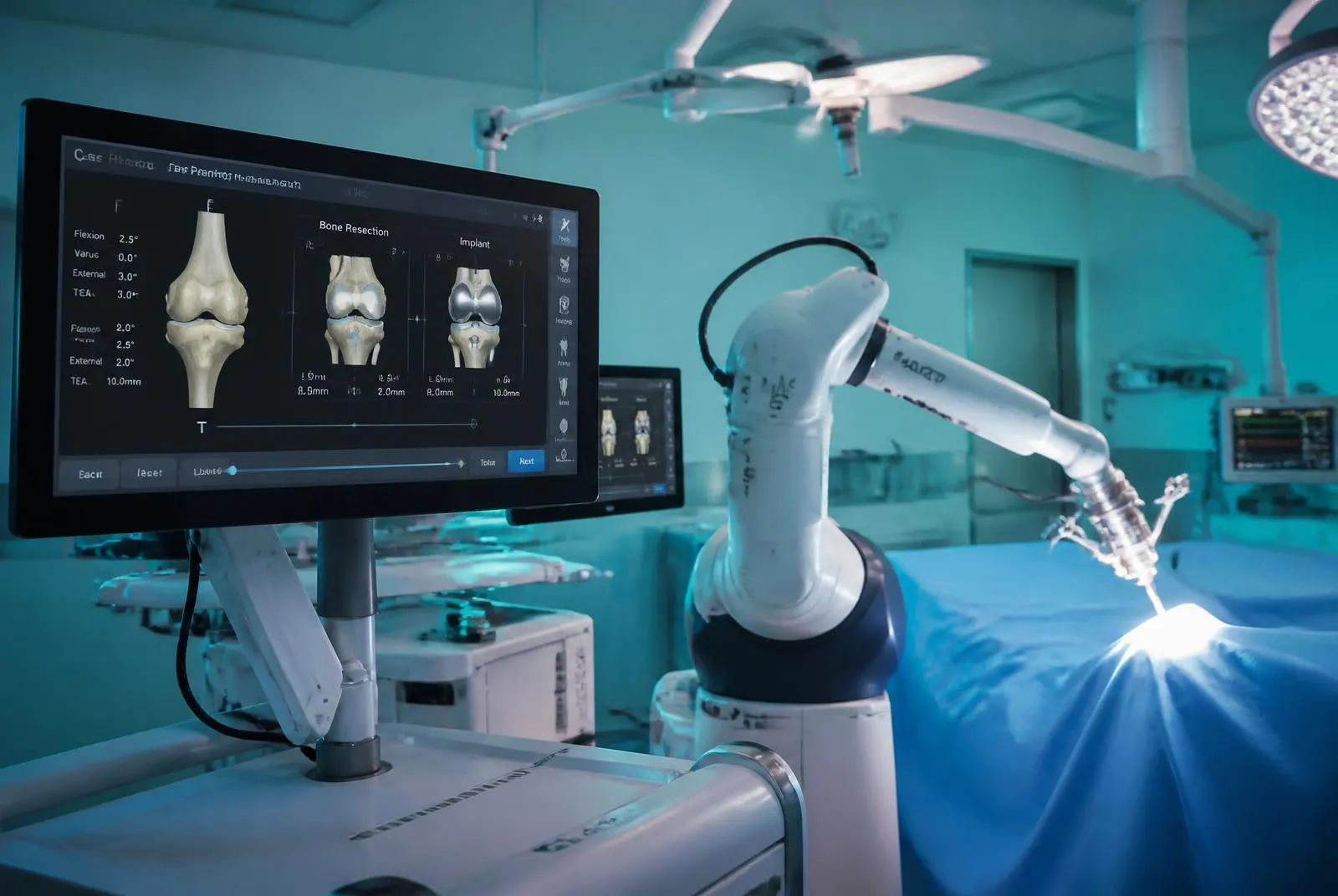
Robotic-assisted knee replacement has moved rapidly from novelty to mainstream, and patients quite reasonably want to know whether it makes a difference to them.
The strongest evidence relates to accuracy. Multiple randomised studies show that robotic assistance produces implant positioning and limb alignment that is closer to the surgical plan than conventional instruments, with fewer outliers. Because malalignment is associated with early failure, this matters.
The evidence on patient-reported outcomes is more nuanced. Several trials show reduced early post-operative pain, less soft-tissue trauma and a faster return of function in the first three months. By one year, the difference between robotic and conventional surgery in most published series narrows considerably.
My own view is pragmatic. Robotic assistance is a valuable tool that improves precision and helps with soft-tissue balancing, particularly in partial knee replacement and in knees with unusual anatomy. It does not replace surgical experience or careful patient selection, and I will always tell you honestly whether it is likely to change your outcome.